
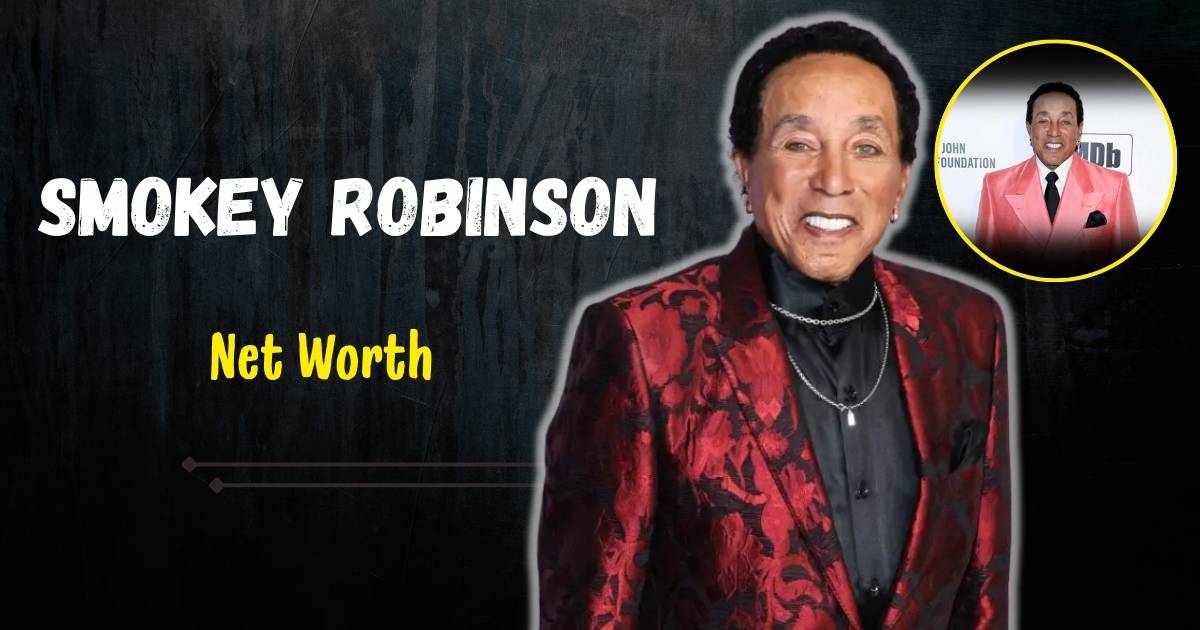
Smokey Robinson stands tall as one of America’s greatest musical treasures. His voice shaped generations. His pen wrote the soundtrack to millions of love stories. Born William “Smokey” Robinson Jr. in Detroit’s bustling streets, he transformed Motown Records from a dream into a cultural phenomenon that still resonates today.
The Smokey Robinson net worth 2025 figure hovers around $150 million. That’s not just impressive it’s a testament to six decades of brilliant career choices. From fronting The Miracles to becoming a solo powerhouse, Robinson built wealth through talent, strategy, and unwavering dedication to his craft.
This deep dive explores how a Detroit kid became an American music icon. We’ll unpack his journey through Motown’s golden era, examine his family dynamics, reveal his real estate empire, and discuss recent controversies. Robinson’s story teaches us about perseverance, creativity, and the business of music itself.
Related post: Angela White Net Worth, Early Life, Age, Height, Wiki & More
Bio
| Attribute | Details |
| Full Name | William “Smokey” Robinson Jr. |
| Stage Name | Smokey Robinson |
| Date of Birth | February 19, 1940 |
| Age (2025) | 85 years |
| Birthplace | Detroit, Michigan, USA |
| Nationality | American |
| Profession | Motown singer-songwriter, solo artist, Motown executive |
| Famous For | Founding member of The Miracles, songwriting prowess, falsetto voice, shaping the Motown sound |
| Active Years | 1955 – Present (over 6 decades in music) |
| Net Worth (2025) | $150 million |
| Primary Income Sources | Music royalties, concert earnings, real estate investments, business ventures |
| Career Highlights | Vice President of Motown Records, Grammy Award winner, Rock and Roll Hall of Fame inductee, Songwriters Hall of Fame inductee |
| Notable Songs | “The Tracks of My Tears” (1965), “You’ve Really Got a Hold on Me” (1962), “I Second That Emotion” (1967), “Cruisin’” (1979), “Just to See Her” (1987) |
| Associated Acts | The Miracles, Berry Gordy, Claudette Rogers, Motown Records |
| Marriages | Claudette Rogers (1959–1986), Frances Gladney (2002–present) |
| Children | Berry Robinson, Tamla Robinson, Trey Robinson |
| Real Estate | Encino, California home (sold), properties in California and Nevada |
| Recent Controversies | Allegations of sexual misconduct (2025 legal proceedings ongoing) |
| Legacy | Architect of the Motown sound, one of the greatest American music icons |
| Instagram Followers (2025) | ~140K (@smokeyrobinson) |
| Twitter/X Followers (2025) | ~95K (@smokeyrobinson) |
| Facebook Followers (2025) | ~700K+ |
| YouTube Subscribers | ~80K (official channel with music videos and performances) |
Who Is Smokey Robinson?
The Voice Behind Motown’s Golden Era
Smokey Robinson isn’t just a name it’s a legacy. William “Smokey” Robinson Jr. emerged from Detroit’s vibrant Detroit music scene as the smooth-voiced frontman who helped Berry Gordy build Motown Records into an empire. He didn’t just perform; he crafted the very essence of what we call the Motown sound today.
His role transcended typical artist boundaries. As a Motown singer-songwriter, Robinson penned classics for Mary Wells, The Temptations, and Marvin Gaye while leading The Miracles to chart-topping success. His falsetto became instantly recognizable. His lyrics spoke universal truths about love and heartbreak.
Today, streaming platforms prove his enduring appeal. “The Tracks of My Tears” generates millions of plays monthly. Young artists sample his work constantly. The R&B and soul legend bridges generational gaps effortlessly, proving great music never ages.
Robinson’s Cultural Impact Today
The Motown legacy lives strongest through Robinson’s continuing influence. Contemporary R&B artists cite him as inspiration. His songs appear in films, commercials, and television shows regularly. The music royalties keep flowing decades after original releases.
Robinson’s catalog represents more than nostalgia. It’s living, breathing art that speaks to modern audiences. Hip-hop producers sample “Cruisin'” and other classics, introducing his genius to new listeners. His work remains relevant because emotions don’t change only the delivery methods do.
In 2025, Robinson still commands respect. His appearances draw crowds. His opinions shape industry discussions. The Smokey Robinson biography continues writing itself as he adapts to streaming, social media, and changing musical landscapes while maintaining artistic integrity.
Smokey Robinson’s Early Life and Background
Growing Up in Detroit’s Musical Melting Pot
February 19, 1940 marked the birth of a legend in Detroit, Michigan. Post-war America buzzed with energy and possibility. The city’s streets echoed with gospel from Sunday services, blues from neighborhood clubs, and jazz from underground venues. Young Robinson absorbed it all.
His family didn’t have wealth. They had something better culture. The Detroit music scene offered free education to anyone willing to listen. Robinson’s ears caught every note, every rhythm, every emotional inflection. These sounds would later form the foundation of his songwriting catalog.
The city itself shaped his artistic vision. Detroit’s working-class grit taught him persistence. Its diverse neighborhoods exposed him to varied musical traditions. This melting pot atmosphere created the perfect environment for a future soul music pioneer to develop his craft.
The Origins of “Smokey”
Uncle Claude gave him the nickname during childhood cowboy film outings. The moniker stuck like glue. Young William became Smokey, shedding “Joe” along the way. This simple name change reflected his emerging identity memorable, smooth, and distinctly his own.
The nickname perfectly suited his personality. Friends remembered him as cool under pressure. Teachers noted his calm demeanor. That smokiness extended to his eventual vocal style smooth as silk, floating over melodies like morning mist over a lake.
By adolescence, “Smokey” had replaced his birth name in most circles. This early branding proved fortuitous. When Motown Records needed memorable artist names, Robinson already had his ready-made persona waiting to shine.
High School Harmonies and First Groups
Northern High School became Robinson’s musical laboratory. He formed vocal groups with classmates during lunch breaks. These early experiments taught him harmony structure, stage presence, and group dynamics skills that would prove invaluable with The Miracles.
Meeting Berry Gordy changed everything. The aspiring songwriter connected with the future mogul through chance encounters in Detroit’s music circles. Their partnership would reshape American popular music forever. Gordy recognized Robinson’s unique talent immediately.
These formative years planted seeds for future success. Robinson learned songwriting basics, performance techniques, and industry navigation. The transition from high school singer to professional artist happened gradually, then suddenly like all great transformations in life.
The Journey of Smokey Robinson’s Career
The Miracles Take Flight (1955-1972)
The Miracles formed when Robinson and his Northern High friends decided to get serious about music. Their early rehearsals happened in basements and garages. Nobody imagined they’d become Motown’s first major act, but talent combined with timing creates magic.
“Shop Around” exploded onto charts in 1960. The song became Motown Records’ first million-seller, validating Gordy’s vision and establishing Robinson as a force. Follow-ups like “You’ve Really Got a Hold on Me” cemented their status. The group’s smooth harmonies defined the Motown era.
Robinson’s dual role as performer and writer maximized the group’s impact. He understood what worked on stage and on record. His songwriting royalties began accumulating as hits mounted. The foundation for his future Smokey Robinson net worth was being laid one classic at a time.
Writing Hits for Motown’s Biggest Stars
Robinson’s pen proved as valuable as his voice. He crafted “My Guy” for Mary Wells a chart-topper that showcased his ability to write from female perspectives. “My Girl” for The Temptations became their signature song. “Ain’t That Peculiar” gave Marvin Gaye another smash.
His music catalog value grew exponentially as these songs became standards. Each composition added to his songwriting catalog, generating music royalties that continue today. Robinson wrote over 4,000 songs during his career an astounding creative output.
The Motown legacy owes much to Robinson’s versatility. He could write uptempo dancers or heartbreaking ballads with equal skill. His melodies felt effortless. His lyrics spoke truth without pretension. These qualities made him indispensable to Motown’s success story.
Behind-the-Scenes Power at Motown Records
Robinson didn’t just create art he helped run the company. As Motown executive Vice President, he influenced which songs got recorded, which artists got signed, and how the label positioned itself. His business acumen matched his creative gifts.
This executive role provided crucial industry education. Robinson learned contract negotiation, publishing rights, and artist development. These skills would later prove essential when building his personal fortune. The Smokey Robinson investments strategy began forming during these corporate years.
Mentoring younger artists became another passion. Robinson guided careers and shared hard-won wisdom. His leadership style emphasized collaboration over competition. This approach built lasting relationships throughout the industry, relationships that continue benefiting him financially and professionally today.
When Did Smokey Robinson Go Solo?
The 1972 Departure Decision
Leaving The Miracles wasn’t easy. Robinson spent 17 years with the group they were family. But creative restlessness gnawed at him. He wanted artistic control. He needed room to experiment beyond group expectations and established formulas.
Personal factors influenced the decision too. Robinson desired more time with Claudette Rogers and their children. Constant touring strained family bonds. Going solo offered flexibility he could choose when and where to perform based on personal priorities.
The announcement shocked fans. The Miracles without Smokey seemed impossible. But Robinson’s diplomatic handling smoothed the transition. He helped select his replacement and remained supportive. This graceful exit preserved relationships and protected his reputation within the industry.
Solo Career Launch and Evolution
The 1973 album “Smokey” announced his independence. “Baby Come Close” introduced his solo sound more mature, more introspective, yet unmistakably Robinson. Critics praised the album’s sophistication. Fans embraced this new chapter enthusiastically.
“Cruisin'” became his solo breakthrough in 1979. The song’s laid-back groove perfectly captured late-70s romantic vibes. It reached number four on Billboard’s Hot 100, proving Robinson could succeed without group support. Radio stations played it constantly.
“Just to See Her” earned Robinson his first Grammy in 1988. The ballad showcased his evolved vocal style still smooth but now carrying decades of lived experience. His solo career transition had fully matured. He commanded higher live performances fees and maintained creative independence.
Chart Performance as Solo Artist
Robinson’s solo discography includes 19 studio albums spanning 1973 to 2014. Several went gold or platinum. His singles charted consistently through the 1980s. “Being With You” hit number one in the UK, expanding his international appeal significantly.
Grammy Award recognition validated his solo work artistically. Chart positions proved commercial viability. But more importantly, Robinson established himself as a complete artist not just The Miracles’ frontman but a standalone talent capable of carrying shows himself.
The financial impact was substantial. Solo artists keep larger revenue percentages than group members. Robinson’s net worth estimates began climbing faster. He controlled his destiny, chose his collaborators, and benefited directly from his creative choices without splitting proceeds.
Smokey Robinson’s Net Worth in 2025
Current Wealth Estimates Breakdown
Smokey Robinson net worth 2025 stands at approximately $150 million according to Celebrity Net Worth estimates and industry analysts. This places him among the wealthiest Motown era legends behind Berry Gordy but ahead of many contemporaries who didn’t diversify income streams strategically.
The figure reflects decades of smart financial decisions. Robinson didn’t blow money on fleeting luxuries. He invested in appreciating assets. His real estate portfolio alone accounts for tens of millions. Add streaming revenue, ongoing music royalties, and music licensing deals, and the numbers make sense.
Some estimates vary slightly. Finance Monthly suggests $160 million while others cite $150 million. The discrepancy comes from private asset valuations. Luxury assets like art collections and private investments don’t appear in public records, making exact calculations impossible.
Year-Over-Year Growth Analysis
| Year | Estimated Net Worth |
| 2022 | $140 million |
| 2023 | $145 million |
| 2024 | $150 million |
| 2025 | $150-160 million |
The steady climb reflects streaming’s impact on catalog values. Robinson’s songs generate income every time someone clicks play. Younger generations discovering classics through Spotify and Apple Music create new revenue streams from old recordings.
Investment appreciation contributes significantly too. California real estate values soared over recent years. Robinson’s Encino property and Chatsworth mansion holdings increased substantially. Smart asset allocation across multiple investment vehicles provides stability during market fluctuations.
What Drives His Wealth Growth?
Music catalog value represents Robinson’s most significant asset. His compositions generate songwriting royalties continuously. Every film placement, commercial license, or cover version triggers payments. These passive income streams require no additional work while producing consistent cash flow.
The streaming era revolutionized catalog economics. Songs that might have faded into obscurity stay relevant through algorithmic recommendations. Young listeners discover “The Tracks of My Tears” organically. Each stream pays fractions of cents but millions of streams add up quickly.
Frances Gladney, Robinson’s wife, reportedly manages many business affairs. Her involvement ensures professional oversight of investments. Together they’ve built a diversified portfolio that protects wealth while generating growth across multiple sectors beyond entertainment.
Major Sources of Smokey Robinson’s Income
Music Royalties and Streaming Revenue
Robinson’s songwriting catalog includes over 4,000 compositions. Each generates mechanical royalties when reproduced, performance royalties when played publicly, and synchronization royalties when licensed for visual media. These three income streams create a perpetual money machine that outlives trends.
“The Tracks of My Tears” alone has been covered by hundreds of artists. Each version triggers payments to Robinson as the songwriter. The song appears in films regularly another revenue source. Commercials occasionally license it too, paying premium rates for nostalgic emotional resonance.
Streaming transformed the game entirely. Younger audiences discovering classic R&B hits through playlists drive unexpected income spikes. Robinson’s monthly Spotify listeners number in the millions. Apple Music, YouTube Music, and other platforms add to totals. It’s a Motown legacy that keeps giving.
Live Performances and Touring
Robinson doesn’t tour constantly anymore, but his live performances command premium pricing. Festival appearances pay six figures. Private events for wealthy clients pay even more. His selective schedule means each performance carries special significance, justifying higher fees.
Casinos and performing arts centers book him regularly. These venues pay well and provide convenient logistics. Robinson can perform near home without grueling tour schedules. This smart approach maximizes income while minimizing physical strain and time away from family.
Corporate events represent another lucrative segment. Companies pay handsomely for legendary performers at retreats and celebrations. Robinson’s wholesome image and universally beloved catalog make him perfect for corporate audiences seeking entertainment without controversy.
Business Ventures Beyond Music
Smokey Robinson real estate holdings span multiple states. Investment properties generate rental income. Primary residences appreciate steadily. He reportedly owns commercial properties too, though details remain private. Real estate provides tax advantages while building equity consistently.
Fashion ventures with Frances Gladney diversify income sources further. Though specifics aren’t widely publicized, industry insiders suggest strategic partnerships in luxury goods. Robinson’s name carries cachet that translates into marketing value for premium brands.
Smart Smokey Robinson investments likely include stocks, bonds, and private equity. Wealthy individuals rarely keep money idle. Diversification protects against market downturns while capturing upside from economic growth. Robinson’s longevity suggests savvy financial advisors managing his portfolio professionally.
Smokey Robinson’s Personal Life and Family
First Marriage to Claudette Rogers
Claudette Rogers married Robinson in 1959. She sang with The Miracles, making them rare partners in both life and career. Their relationship seemed fairytale-perfect young love and musical success intertwined beautifully during Motown’s glory years.
They welcomed Berry Robinson and Tamla Robinson named after Berry Gordy and Tamla Records, reflecting the couple’s deep ties to Motown history. The children grew up surrounded by music legends, experiencing childhood unlike most Americans.
But fame strained the marriage. Touring schedules separated them for months. Temptations arose. The pressure of maintaining public perfection while navigating private challenges eventually proved overwhelming. Their relationship faced tests that many marriages couldn’t survive.
Trey Robinson and Public Acknowledgment
Trey Robinson entered the picture during Robinson’s first marriage the result of an affair. Acknowledging paternity publicly took courage. Robinson could have denied or hidden the truth, but he chose honesty despite potential reputation damage.
This revelation contributed to his divorce from Claudette Rogers. The betrayal hurt deeply. Their 1986 separation ended a 27-year marriage. Robinson has since expressed regret about choices made during that period, showing personal growth and accountability.
Father-son relationships with all three children Berry Robinson, Tamla Robinson, and Trey Robinson apparently remain strong today. Robinson learned from mistakes. He prioritized family in later years, recognizing that fame means nothing without meaningful personal connections to anchor your life.
Finding Love Again with Frances Gladney
Frances Gladney became Robinson’s partner in 2002. Their marriage represents his second act personally and professionally. She brought stability, business acumen, and partnership. Friends describe their relationship as genuinely loving and mutually supportive.
Frances Gladney reportedly manages many of Robinson’s business affairs. She’s not just a wife but a partner in the truest sense. Her involvement suggests trust and respect Robinson values her judgment on financial and career matters alike.
Together they’ve navigated aging, continued relevance, and wealth management. The partnership appears far healthier than Robinson’s first marriage. Maturity, therapy, and lessons learned from past mistakes contributed to building something sustainable and authentic this time around.
Smokey Robinson’s Real Estate and Luxury Assets
California Property Portfolio
The Encino property a sprawling 10,600-square-foot estate represented Robinson’s taste for California luxury living. He sold it in 2002 for undisclosed millions. The sale timing proved fortuitous as California real estate subsequently skyrocketed, though he likely profited handsomely even then.
His Chatsworth mansion listing near $7.99 million showcased his continued investment in premium properties. The home featured every luxury amenity imaginable. Such properties don’t just provide housing they’re appreciating assets that function as partial wealth storage vehicles.
Current holdings remain somewhat private. Wealthy individuals don’t broadcast exact addresses for security reasons. But industry sources suggest Robinson maintains residences in California and possibly other states, continuing his pattern of strategic real estate investment.
Multi-State Real Estate Holdings
Diversifying geographically protects against regional market downturns. If California prices dip, other markets might rise. Robinson’s real estate portfolio reportedly includes investment properties generating rental income another passive revenue stream requiring minimal active management.
Property appreciation forms a huge component of the Smokey Robinson fortune. Real estate generally tracks or exceeds inflation. Quality properties in desirable locations increase steadily. For someone with Robinson’s timeline and resources, real estate represents smart long-term wealth preservation.
Estate planning likely influences property decisions too. Real estate transfers to heirs often carry tax advantages. Robinson’s children Berry Robinson, Tamla Robinson, and Trey Robinson stand to inherit a diversified portfolio that continues generating income for future generations.
Luxury Lifestyle and Collections
Robinson’s car collection isn’t extensively documented, but wealth at his level typically includes high-end vehicles. Classic cars, luxury sedans, and special edition automobiles often appear in celebrity garages. These purchases combine personal enjoyment with potential investment value.
Art and memorabilia collections provide both aesthetic pleasure and financial value. Music legends often collect work from artist friends. These pieces appreciate while decorating homes. Robinson’s Motown era connections mean access to historically significant items worth substantial sums.
His lifestyle balances comfort and responsibility. Unlike some celebrities who flaunt wealth ostentatiously, Robinson maintains relative privacy. He enjoys life’s finer things without needless extravagance a measured approach that preserves wealth rather than depleting it through excess.
Awards, Honors, and Career Achievements
Hall of Fame Inductions
The Rock and Roll Hall of Fame inducted Robinson in 1987 recognition of his massive impact on popular music. Standing alongside legends validated his contributions. The Songwriters Hall of Fame followed, honoring his compositional genius specifically. These aren’t just trophies they’re eternal acknowledgments of excellence.
His Hollywood Walk of Fame star(s) cement his status in entertainment history. Tourists photograph these markers daily, keeping his name visible to new generations. Such honors increase music catalog value by maintaining cultural relevance and brand recognition.
Grammy Hall of Fame inducted several Robinson recordings, preserving them as culturally significant. These aren’t typical awards they’re scholarly recognition that his work merits permanent study and celebration. His music transcended entertainment to become American cultural artifacts.
Grammy Recognition and Wins
“Just to See Her” won Robinson a Grammy Award for Best R&B Vocal Performance, Male in 1988. The victory came during his solo career renaissance, proving he remained relevant decades after his Motown heyday. Grammy voters recognized continued excellence, not just nostalgia.
Multiple Grammy nominations throughout his career demonstrate consistent quality. Even without winning every time, nominations keep artists in conversation. They boost bargaining power for performance fees and licensing deals. Industry respect translates directly into financial opportunities.
Lifetime Achievement Awards from various organizations recognize Robinson’s overall impact rather than individual songs. These honors acknowledge his role shaping American music fundamentally. They validate his status as an American music icon whose influence extends far beyond chart positions.
Industry Leadership Recognition
Kennedy Center Honors, the National Medal of Arts, and similar prestigious awards place Robinson among America’s cultural treasures. These aren’t music industry awards they’re national recognition from institutions celebrating American achievement across all disciplines.
BET Lifetime Achievement Awards and similar honors from African American organizations celebrate his specific impact on Black music and culture. Robinson’s success opened doors for countless artists who followed. His business acumen demonstrated soul music could build sustainable wealth.
The Gershwin Prize for Popular Song from the Library of Congress represents perhaps the highest songwriting honor possible. Winning it places Robinson in company with Paul Simon, Stevie Wonder, and other absolute titans. It’s permanent recognition of artistic achievement.
Recent News, Allegations, or Controversies
2025 Lawsuit Details
The 2025 lawsuit shocked fans. Four former housekeepers filed a $50 million suit against Robinson, alleging sexual assault allegations spanning multiple years. The claims include inappropriate touching, crude comments, and a hostile work environment. These are serious accusations requiring serious examination.
Details remain under legal seal partially, but court filings outline disturbing patterns allegedly occurring in Robinson’s homes. The housekeepers claim they stayed silent due to financial need and fear of retaliation. Their lawyer presents evidence supporting a coordinated effort, not isolated incidents.
Frances Gladney is named in the suit too, accused of enabling behavior and creating hostile conditions. The allegations suggest she knew about misconduct but took no corrective action. This implicates her as complicit rather than merely an uninvolved party.
Robinson’s Response and Countersuit
Robinson filed a $500 million defamation countersuit, claiming false allegations designed to extort money from him. His legal team argues the housekeepers coordinated fabricated stories. They point to timing why wait years to report if incidents truly occurred?
Complete denials characterize Robinson’s public statements. He maintains innocence emphatically, calling accusations character assassination. His lawyers present counter-evidence suggesting opportunistic plaintiffs exploiting an elderly celebrity’s vulnerability to negative publicity regardless of truth.
The legal battle will unfold over months or years. Discovery processes will reveal more facts. Right now, we have accusations and denials nothing proven. Fair-minded observers withhold judgment until courts examine evidence thoroughly and reach conclusions based on facts, not emotions.
Potential Impact on Legacy
Public perception already shifted somewhat. Some radio stations reduced Robinson’s airplay. Festival organizers reconsider bookings. The Smokey Robinson controversies create complications even without proven guilt. In modern culture, accusations alone damage reputations significantly.
Financial implications could be massive. A $50 million judgment would dent even Robinson’s fortune. Legal fees mount quickly. Lost performance opportunities represent additional costs. Settlement discussions likely happen behind closed doors, potentially resolving matters before trial.
However, Robinson’s Motown legacy likely survives regardless of lawsuit outcomes. Michael Jackson’s controversies didn’t erase “Thriller.” Woody Allen’s films still screen. Audiences often separate art from artist when work resonates deeply. Robinson’s songs may outlast any scandal ultimately.
Conclusion
Smokey Robinson journey from Detroit’s streets to American music royalty teaches powerful lessons. His Smokey Robinson net worth 2025 figure of $150 million represents more than accumulated wealth it’s proof that talent, strategy, and persistence create lasting success.
The Motown legacy he helped build changed American culture forever. His songs soundtrack memories for millions across generations. The Miracles launched a movement. His solo work sustained excellence. As Motown executive, he shaped industry practices.
Current Smokey Robinson controversies complicate his story. The 2025 lawsuit brings serious allegations requiring fair examination. Yet his career achievements remain undeniable Rock and Roll Hall of Fame, Grammy wins, thousands of compositions that defined soul music and R&B classics forever.
Robinson’s songwriting legacy will outlive controversy. “The Tracks of My Tears,” “Cruisin’,” and other classics transcend scandals. They’re woven into American cultural fabric permanently. Future generations will discover them, ensuring his music catalog value persists indefinitely.
His fortune-building strategy offers lessons: diversify income, invest wisely, protect assets, think long-term. Robinson didn’t just earn money he built sustainable wealth systems generating income decades after initial work. That’s the difference between stars and legends.

Willem Janssen is the admin of Celebrora, a blog dedicated to the world of celebrities. With a passion for entertainment and storytelling, he curates engaging content that brings readers closer to their favorite stars. Willem ensures Celebrora remains a trusted space for fresh updates, insights, and features about the lives of celebrities.