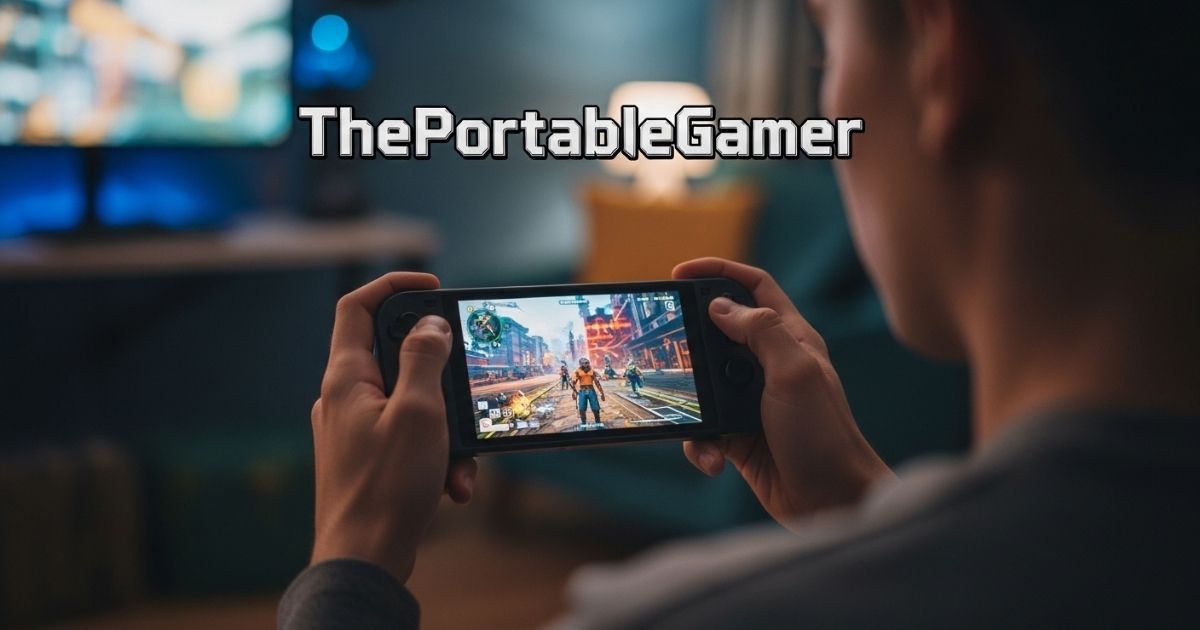
Portable gaming has completely taken over. What started as a casual side hobby has exploded into a full-blown gaming revolution and if you haven’t noticed yet, you’re already behind. Millions of American gamers have ditched their couch setups and embraced handheld gaming trends that fit their actual lives. Commutes, lunch breaks, late nights gaming on the go has never been this powerful.
ThePortableGamer has been tracking this shift longer than most. Their coverage of tportstick gaming trends cuts through the noise and delivers real insight for real players. Whether you’re curious about portable gaming devices, cloud streaming, or what’s coming next this article covers everything. Let’s get into it.
Related Post: Ast Hudbillja Odds: Your Complete Betting Insight
Tportstick Gaming Trends From ThePortableGamer
The tportstick gaming trend isn’t just a buzzword. It represents something genuinely new the merging of mobile gaming accessories, smarter hardware, and a player base that refuses to stay home. ThePortableGamer has documented this evolution closely and the numbers back it up hard.
The handheld console market is growing at over 10% CAGR annually. Hybrid gaming consoles now command roughly 67% of the portable market. Dedicated handhelds hold 22% and smartphone-focused gaming accounts for the remaining 11%. That split tells you everything flexibility wins above all else.
Here’s what’s actually driving the tportstick movement right now:
- Gaming controllers for phones clip-on triggers and joysticks transforming smartphones overnight
- Lightweight devices that don’t overheat during long sessions
- Open software stacks enabling deep portable gaming setup customization
- Cooling systems, button pads, and ergonomic grips improving comfort dramatically
- Honest, player-first coverage from ThePortableGamer building genuine community trust
| Segment | Market Share |
| Hybrid Devices | 67% |
| Dedicated Handhelds | 22% |
| Mobile Phone Gaming | 11% |
Innovative Game Design for Mobile Platforms
Here’s something most people miss the biggest shift isn’t the hardware. It’s how games are actually built now. Developers are designing experiences specifically for mobile-first game design principles rather than just shrinking console ports and calling it a day. That change is massive.
Best games designed for short sessions are leading this charge. Instead of a three-hour campaign mission, you get three focused ten-minute bursts. That structure respects your schedule and plays directly into the strengths of gaming on smartphones. It’s smart design meeting real life.
Look at the contrast between old-school console design and today’s portable-first approach:
| Design Element | Traditional Console | Mobile/Portable-First |
| Session Length | 1–3 hours | 5–20 minutes |
| Input Method | Controller | Touch, gyro, clip-on |
| Progression | Linear story beats | Modular milestones |
| Monetization | One-time purchase | Subscription/F2P |
| Accessibility | Assumed hardware | Optimized for varied screens |
Indie games on mobile deserve serious credit here. Portable platforms hosted over 4,200 indie titles last year compared to just 800 on traditional consoles. Smaller teams, sharper ideas, and faster development cycles indie studios have found their natural home. Games like Genshin Impact proved that mobile gaming performance can match console depth when developers actually try.
Why American Gamers Are Embracing Mobile-First Design
American life doesn’t pause for gaming. Commutes, work breaks, family time the average US gamer grabs sessions wherever they fit. Portable gaming setup for beginners has never been more accessible because the barrier to entry is genuinely low now.
Think of it like streaming versus cable TV. You don’t schedule your life around a show anymore you watch when it suits you. Portable gaming works the same way. You play on your terms and the games are finally built to support that.
Gaming accessories for smartphones have accelerated this shift further. A decent clip-on controller and a phone with a strong processor gives you a legitimate gaming experience. No TV required. No dedicated console needed.
Community and Social Features
Gaming used to be a solo sport. You sat alone, you played alone, you maybe called a friend afterward. Those days are gone. Mobile gaming communities have transformed portable gaming into one of the most socially connected experiences in entertainment today.
Players aren’t just launching games anymore. They’re joining clans, entering live tournaments, streaming their sessions, and following creators who shape how they think about the meta. That social layer has become inseparable from the game itself and for US gamers especially, it’s a huge draw.
Key community features now standard across portable platforms:
- In-game leaderboards rewarding progress publicly
- Live-streaming integration broadcasting directly from handheld devices
- Built-in real-time voice and text chat no third-party apps required
- Clan and squad systems carrying across game modes
- Seasonal events keeping communities active between major updates
“The social infrastructure around portable gaming has quietly become as important as the games themselves.” ThePortableGamer
Discord and Twitch have amplified this dimension enormously. US-based creators on YouTube and Kick have helped normalize portable esports gaming as a legitimate competitive space. Prize pools for mobile esports now exceed $50 million annually that’s not casual territory anymore.
Cross-Platform Play and Compatibility
Your friends don’t all own the same hardware. That used to be a real problem. Cross-platform gaming completely eliminates that barrier and it’s now a baseline expectation rather than a bonus feature worth celebrating.
How crossplay improves gaming experience comes down to four core benefits. Larger matchmaking pools mean faster lobbies and tougher competition. Progress portability lets you start a session on PC and finish it on your handheld without losing a single step. Longer game lifespans keep communities together long after launch. And more value per purchase means you’re never locked into replaying content across separate devices.
Fortnite and Rocket League demonstrated this early and brilliantly. They blurred the line between console, PC, and mobile communities before anyone else dared to try. Today, best cross-platform games for mobile players routinely top download charts because players understand the value. For American gamers choosing what to buy next, cross-play support is often the deciding factor.
Mobile gaming vs PC gaming comparison used to favor PC by a wide margin. That gap is closing fast. Can you play AAA games on a phone? With cross-platform infrastructure and cloud support, the honest answer is increasingly yes.
The Impact of Streaming Services on Portable Gaming
Cloud gaming isn’t the future anymore. It’s Tuesday. How cloud gaming works on mobile is elegantly simple your inputs travel to a remote server, the game runs there, and the video streams back to your screen in near real time. Average input lag on leading platforms sits at just 40–60 milliseconds. Most players can’t even notice it.
Is cloud gaming worth it on handheld devices? For most US gamers with stable internet, absolutely yes. Here’s what it actually unlocks:
- Streaming games on mobile demanding AAA titles on lightweight hardware that couldn’t run them locally
- Zero downloads, zero storage management, zero lengthy update installs
- Access to enormous game libraries through a single gaming subscription services fee
- Consistent performance regardless of your device’s age or specs
What devices support portable cloud gaming keeps expanding. Xbox Cloud Gaming leads the charge and major storefronts have built cloud access directly into their ecosystems. Cloud gaming platforms now account for roughly 30% of total portable gaming hours and that number climbs every quarter.
The one honest caveat: rural America still struggles with connectivity. How to reduce lag in cloud gaming comes down largely to internet quality. But as infrastructure improves nationally, dependency on expensive local hardware keeps shrinking. Subscription models pay monthly, access everything are the natural business model here and they’re winning.
Future Trends in Portable Gaming
The trajectory is clear and it’s accelerating fast. Trends shaping the future of handheld gaming point toward a portable ecosystem that rivals and in some areas surpasses traditional console and PC gaming. Here’s what’s genuinely coming.
AR and VR are going portable. Lightweight, self-contained headsets are edging toward real portability. Beyond Pokémon GO, portable AR is expanding into strategy, fitness, and social gaming categories. Future of portable gaming industry projections consistently cite AR/VR integration as a top growth driver through 2028.
AI-powered personalization is reshaping the in-game experience itself. Adaptive difficulty systems, personalized challenge scaling, and AI-generated content responding to how you actually play these aren’t concepts anymore. They’re in active development across major studios. Games will stop being static experiences and start feeling genuinely responsive.
Is handheld gaming better than console? In specific categories portability, accessibility, indie innovation, community engagement it’s already ahead. The remaining gaps are closing faster than most analysts expected.
Here’s a quick look at what’s ahead:
| Trend | What It Means For You |
| Foldable Hardware | More versatile, lifestyle-friendly devices |
| AI Personalization | Games that adapt to your skill level |
| Better Batteries | 8–10 hours active gameplay already possible |
| AR/VR Portability | Immersive gaming without a dedicated room |
| Indie Dominance | More creative, innovative titles on portable first |
Gaming hardware innovation in the battery space is particularly exciting. Devices already hit 8–10 hours of active gameplay covering a full workday plus commute. As chip efficiency improves further, that number keeps climbing. Best portable gaming devices in 2026 consistently prioritize battery life above almost everything else and manufacturers are responding accordingly.
How to improve mobile gaming performance will also become a simpler question as hardware standardizes around higher baselines. What requires optimization today will be default tomorrow.
Conclusion
Portable gaming isn’t a scaled-down version of real gaming anymore. It is real gaming with its own design philosophy, competitive identity, hardware ecosystem, and thriving community culture. The top stick gaming trends from ThePortableGamer confirm what millions of US players already know firsthand.
From cloud streaming eliminating hardware limitations to cross-platform play keeping friend groups together, from AI-driven personalization to indie-led creative breakthroughs every major trend points the same direction. The handheld gaming trends of 2026 aren’t catching up to consoles. In key areas, they’re pulling ahead.
If you haven’t made portable gaming your primary platform yet, the landscape gives you every reason to reconsider. And if you’re already in? You’re ahead of a curve the rest of the industry is now racing hard to join. Keep following ThePortableGamer they’ll make sure you never miss a step.

Willem Janssen is the admin of Celebrora, a blog dedicated to the world of celebrities. With a passion for entertainment and storytelling, he curates engaging content that brings readers closer to their favorite stars. Willem ensures Celebrora remains a trusted space for fresh updates, insights, and features about the lives of celebrities.